Three historical experiences, three different perspectives, and a day that stayed with me long after I returned home
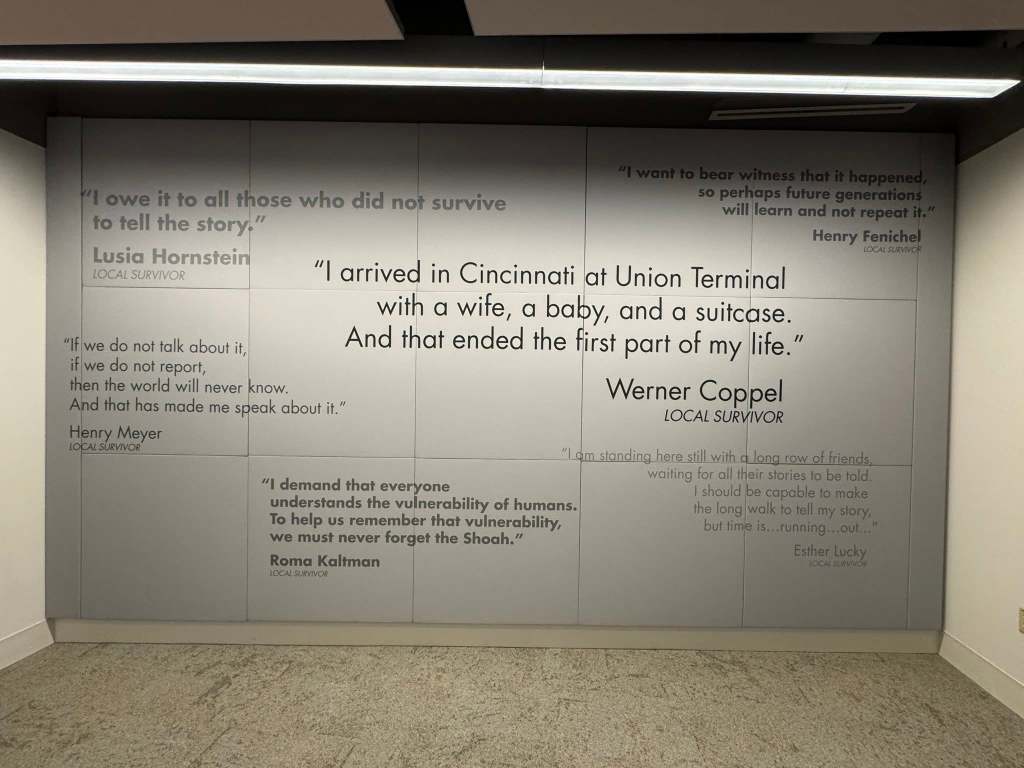
I visited these three Cincinnati experiences several months ago, but the day has stayed with me.
I began with the Auschwitz exhibit, continued through the Nancy and David Wolf Holocaust & Humanity Center, and then spent the afternoon at the National Underground Railroad Freedom Center.
Each experience focused on a different part of history and presented it in its own way. Together, they created a somber reminder of what humanity is capable of, both in cruelty and in courage.
This was not the kind of day I walked away from ready to immediately put into words. It took time to process what I had seen and determine what stayed with me most.
Walking Through the Auschwitz Exhibit
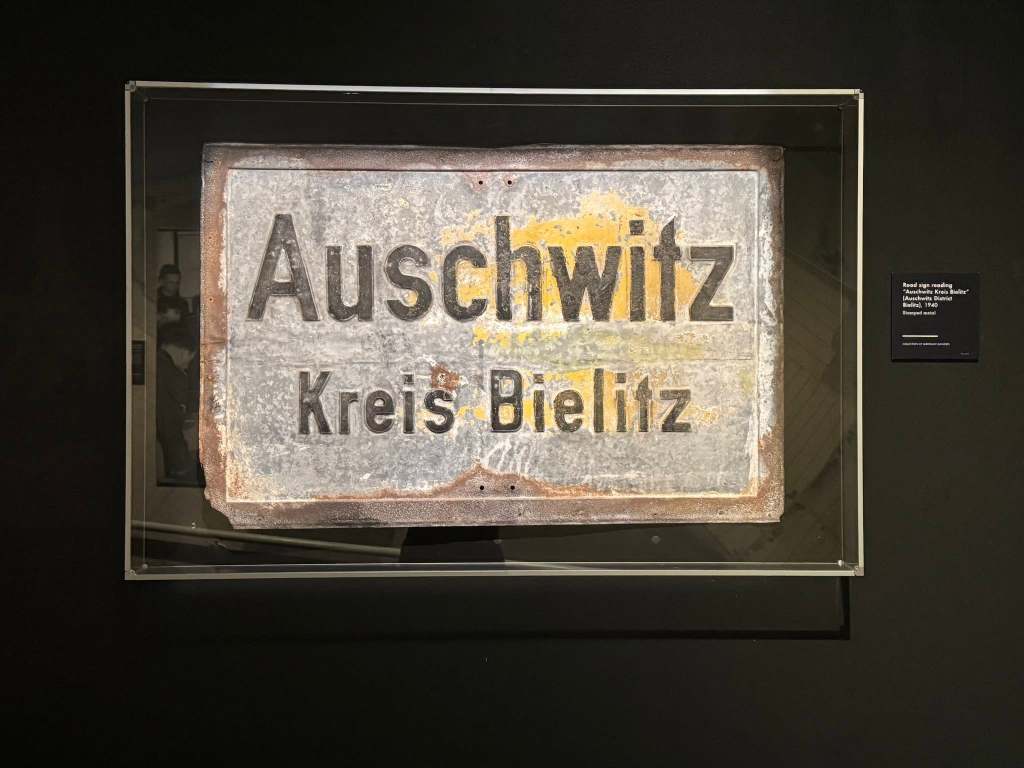
The Auschwitz exhibit was heavy. Not in an exaggerated or dramatic way. It was simply difficult to absorb.
There were photographs, names, personal belongings, and individual stories that made it impossible to keep the history at a comfortable distance. It is one thing to know the facts of the Holocaust. It is another to stand in front of objects that belonged to real people and recognize the lives behind the dates and statistics.
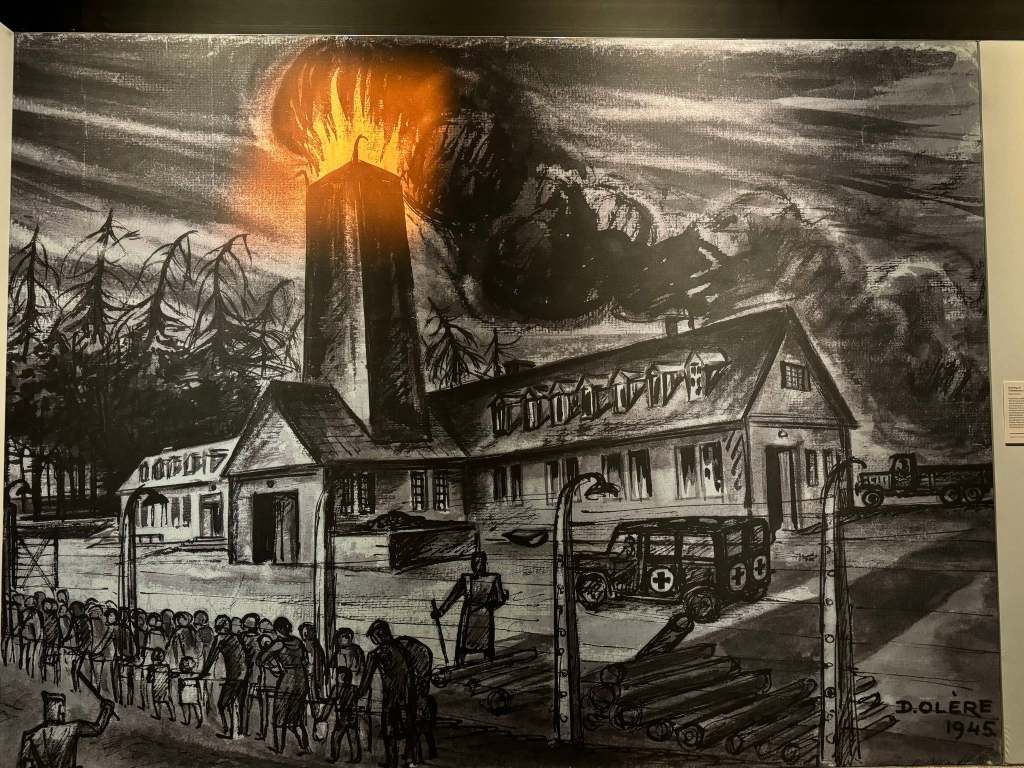
I moved through the exhibit slowly. There were displays I could not simply glance at and move past. Every item represented someone who had a family, routines, hopes, fears, and a life before persecution changed everything.
The scale of the Holocaust can be difficult to comprehend, but the personal objects made it feel painfully specific. The exhibit did not allow those who were murdered or imprisoned to remain anonymous numbers.
If you plan to visit an exhibit like this, give yourself time. It is not something to squeeze between several other stops or rush through before your next reservation. It deserves your attention.
The Nancy and David Wolf Holocaust & Humanity Center
After the Auschwitz exhibit, I continued through the Nancy and David Wolf Holocaust & Humanity Center.
Although the subjects naturally connect, this was its own experience. The center expanded the history beyond Auschwitz and focused on the Holocaust, the people affected by it, the experiences of survivors, and the choices individuals made during that period.
There were stories of cruelty and loss, but there were also stories of survival, resistance, rescue, and people who chose to help when doing so placed them at risk.
What stood out to me was the attention given to individual choices.
Large historical events can feel distant when they are reduced to governments, military movements, and timelines. The center brought the focus back to people. Some people participated in harm. Some remained silent. Some resisted. Some risked their own safety to protect others.
That does not simplify the history or suggest that every person had equal power to change what was happening. It does, however, show that human choices were present throughout it.
The center also made clear that remembering the Holocaust is not only about looking backward. It is about understanding how dehumanization takes hold and recognizing why individual dignity, awareness, and action still matter.
An Afternoon at the National Underground Railroad Freedom Center
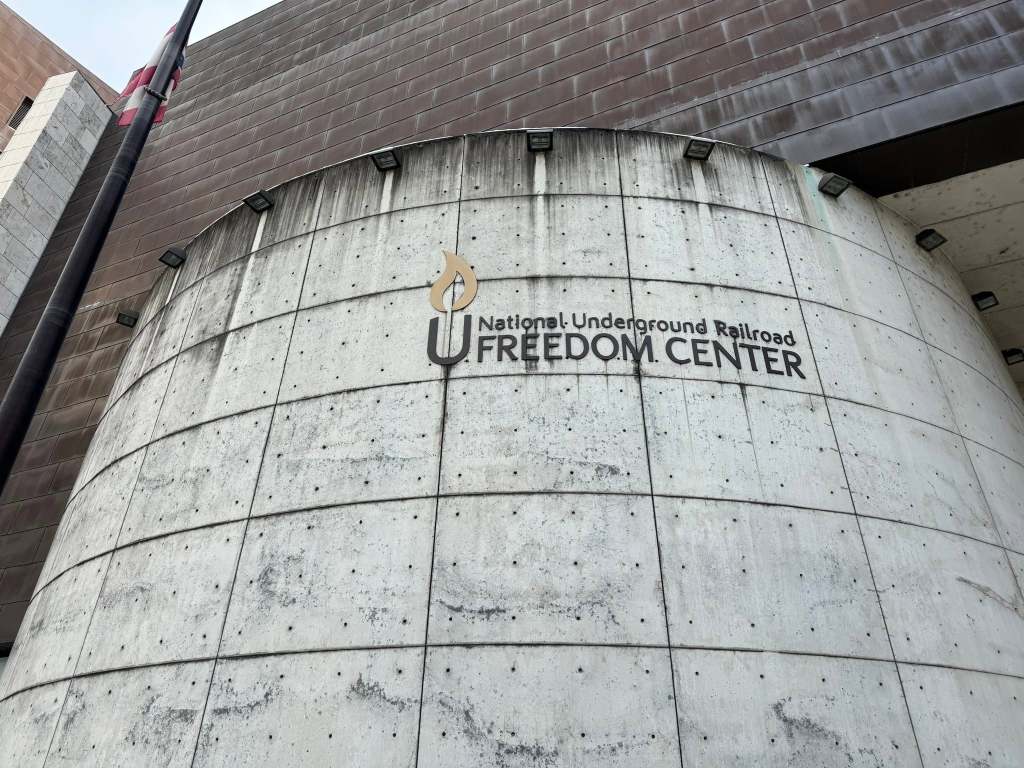
From there, I spent the afternoon at the National Underground Railroad Freedom Center.
This museum carried a different kind of heaviness.
The history of slavery in the United States is brutal and deeply personal. The Freedom Center did not soften that reality. It confronted the violence, control, family separation, and loss of freedom endured by enslaved people.
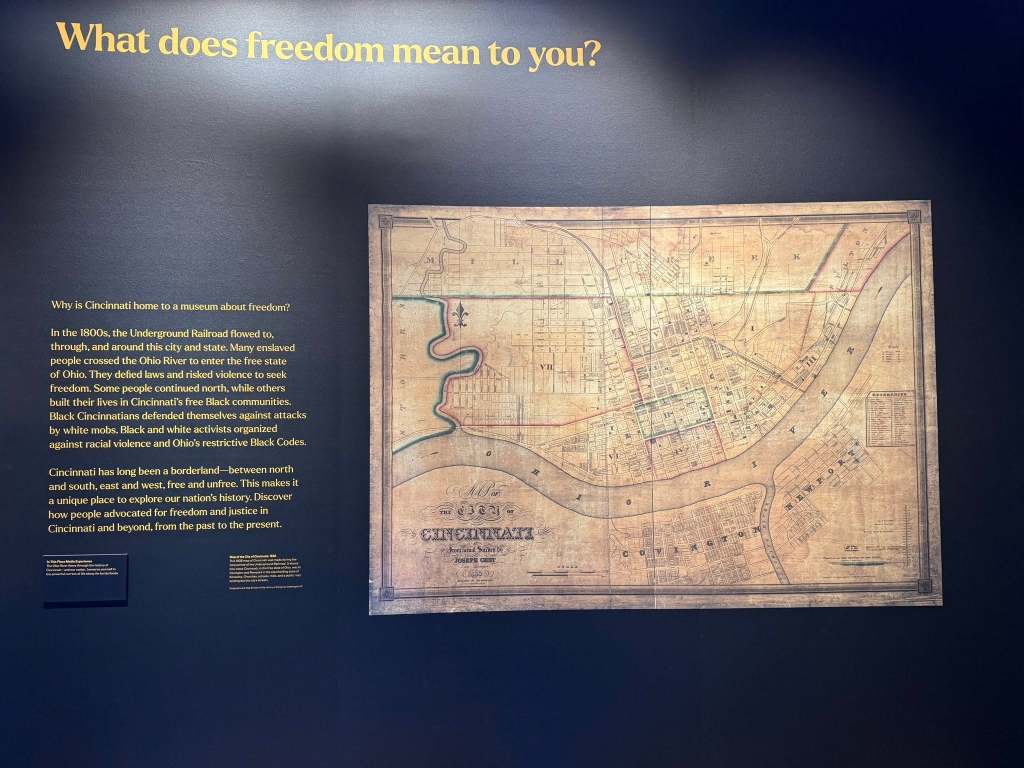
At the same time, it also centered resilience, faith, resistance, and the relentless pursuit of freedom.
The Underground Railroad was not one clearly marked route or a single organized system. It depended on enslaved people taking enormous risks to escape and on others choosing to guide, shelter, protect, or assist them.
What stayed with me was the courage required at every step.
Freedom was not safely waiting at the end of an easy path. Pursuing it could mean leaving family behind, traveling through unfamiliar places, relying on people whose trustworthiness could not always be known, and continuing despite the possibility of capture or death.
The museum made the history feel immediate and human. These were not distant figures moving through an abstract story. They were people making difficult choices under circumstances they never should have had to endure.
The pain was impossible to overlook, but so was the determination.
Three Experiences That Added Different Layers to the Day
The Auschwitz exhibit, the Holocaust & Humanity Center, and the National Underground Railroad Freedom Center were not interchangeable experiences.
The Auschwitz exhibit brought me close to the physical evidence and personal belongings connected to one of history’s most horrific places.
The Holocaust & Humanity Center expanded that history through the experiences of individuals, survivors, rescuers, and communities while examining the consequences of hatred and dehumanization.
The Freedom Center told the history of slavery, resistance, escape, and the continued struggle for freedom.
These histories should not be blended together or treated as though they are the same. Each deserves to be understood within its own context.
Still, visiting all three on the same day revealed difficult parallels involving oppression, dehumanization, silence, resistance, survival, and the choices people make when another person’s humanity is being denied.
Each experience asked me to look carefully rather than turn away.
The Kind of Day That Stays With You
By the time I left the Freedom Center, I was much quieter than I had been when I arrived.
I felt reflective and more aware of how important it is to remember history as the lived experience of real people. It is easy to read a summary, recognize a familiar name, and believe we understand what happened. Standing in front of personal belongings and reading individual stories makes that distance harder to maintain.
Several months have passed since that visit, and I still think about the faces, names, objects, and stories.
I think about the people who suffered.
The people who survived.
The people who resisted.
The people who helped.
I also think about the people who participated, remained silent, or looked away.
Some days do not entertain you. They shape the way you think.
This was one of those days.
Practical Tips for Planning Your Visit
If you plan to experience all three, allow most of the day. Even if you can physically walk through them more quickly, the subject matter deserves time and mental space.
Avoid creating an overly packed schedule for afterward. A slow walk, a quiet meal, or a little time to sit before driving home may be a better fit than immediately rushing into another major attraction.
For the National Underground Railroad Freedom Center, I parked at the CRG parking lot just past the museum. It made getting around much easier.
Wear comfortable shoes, bring water, and expect to do a considerable amount of reading. More importantly, arrive willing to slow down.
Planning a Thoughtful Cincinnati Visit
Cincinnati has plenty of lively attractions, restaurants, tours, and entertainment, but these historical experiences show another side of the city.
They create space for learning, reflection, and conversations that are not always comfortable but are still important.
If you are planning a Cincinnati itinerary, I would give these experiences their own day. Trying to fit them between several lighter attractions could make the day feel rushed and leave little room to process what you have seen.
If you enjoy browsing travel ideas independently before making plans, my travel site is also available as a place to explore possibilities at your own pace.
Travel is not always about entertainment or escaping everyday life. Sometimes it gives us an opportunity to learn, remember, and better understand experiences beyond our own.
That is also one reason I remain interested in the travel industry. Some people enjoy taking trips. Some enjoy helping others explore. Others become a Travel Agent or Travel Marketing Rep because they want travel to have a more consistent place in their lives.
If you have ever wondered about that side of travel, you are welcome to reach out and ask questions. No pressure, just conversation.
Before I Go
Have you ever visited a museum, memorial, or historical exhibit that stayed with you long after you left?
If you are comfortable sharing, I would love to hear where it was and what part of the experience remained with you.
Some journeys introduce us to a new place. Others ask us to look more honestly at where humanity has already been.
Until next time, keep learning, remembering, and wandering with me.


Leave a Reply